
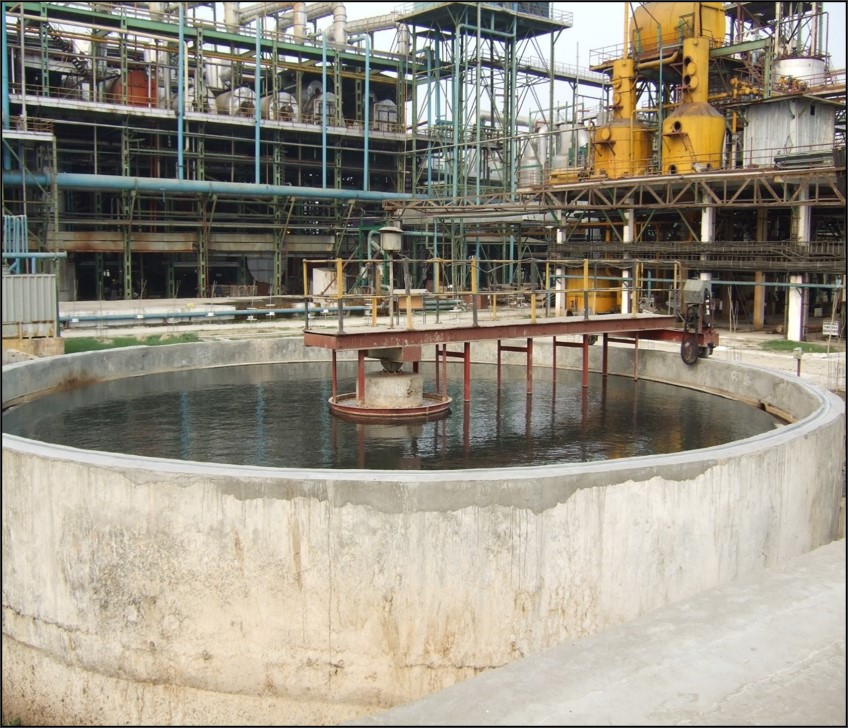
A large fraction of the ETPs running in Indian industrial estates today were commissioned between 2005 and 2015. Most of them were sized for the plant capacity at the time of commissioning, with little allowance for growth. Ten years later, the production capacity has increased by 40-80% but the ETP is the same size. The biology is running at 130-150% of design load. The outlet BOD is creeping up. The SPCB renewal is coming up. And the question is: what do you do?
The answer is almost never "build a new ETP from scratch." That takes 12-18 months, costs ₹1-5 crore depending on scale, and usually requires a plant shutdown during commissioning. The answer is usually a targeted retrofit. This guide covers the main retrofit options for biological, primary, and equalization stages, with honest numbers on cost and performance improvement.
When Retrofit Makes Sense vs. New Build
Retrofit is the right choice when all three of the following are true: the existing civil structures are in good condition (no cracking, leakage, or structural compromise); the capacity gap is less than 3x (you need to go from 300 KLD to 700 KLD, not from 300 KLD to 2,000 KLD); and the plant cannot tolerate a long shutdown for new civil construction.
New build wins when: the existing plant is in poor condition (leaking tanks, corroded piping, failed diffusers throughout); the technology change required is fundamental (existing extended aeration to ZLD — you need completely new infrastructure); or available land allows a full-scale expansion at lower marginal cost per unit capacity than retrofit.
The cost crossover point is roughly at 2.5-3x the existing capacity. Below that, retrofit (especially MBBR media retrofit for biological stage) almost always costs less per unit of additional capacity than new civil construction. Above 3x, you are adding so much media and associated equipment that the cost approaches a new build anyway — and a new build gives you a better overall system for the same money.
MBBR Media Retrofit: How It Works and What to Expect
MBBR media retrofit is the most common and most cost-effective biological upgrade for overloaded Indian ETPs. The concept: fill 40-60% of the existing aeration tank volume with plastic biofilm carriers (MBBR media). The media provides a large attached-growth surface area that multiplies the biological treatment capacity without increasing tank volume.
What changes in the retrofit:
- Media screens: Retention screens must be installed on the aeration tank outlet to prevent media from leaving the tank. Standard screen aperture is 8-10 mm for K5 media, 10-12 mm for K3 media. Screens must be designed for the full hydraulic capacity of the tank.
- Diffuser upgrade: MBBR requires coarse-bubble aeration for media mixing in addition to fine-bubble aeration for oxygen transfer. Most activated sludge tanks have only fine-bubble diffusers (good for oxygen transfer but cannot keep media moving). You need to add a coarse-bubble grid or replace a portion of the fine-bubble diffusers with coarse-bubble units.
- Blower capacity: MBBR typically requires 10-15% more air volume than activated sludge at the same BOD load, because the coarse-bubble diffusers for media mixing are less efficient than fine-bubble diffusers. Check whether existing blowers have the capacity headroom, or add a supplementary blower.
- Clarifier changes: In a hybrid MBBR-AS system, the clarifier continues to serve the suspended growth fraction. In a pure MBBR system (no MLSS in the tank), the clarifier loads are lower. For most retrofits (hybrid approach), clarifier changes are not required unless the existing clarifier is already at its limit.
Expected performance improvement: a well-executed MBBR media retrofit at 50% fill increases biological BOD removal capacity by 1.8-2.5x. For a 300 m³ extended aeration tank treating 200 kg BOD/day, after retrofit expect capacity of 380-500 kg BOD/day. The system takes 4-8 weeks to stabilize after media addition as the biofilm establishes.
What goes wrong: the most common retrofit failure is installing media without upgrading the aeration system. The new media requires different air distribution, and if the diffuser layout is not modified, you get uneven media circulation, media clumping in corners, and poor biofilm growth. Do not let a contractor tell you that media can simply be dropped into an existing aeration tank without any aeration system changes — this is not true for most tanks.
SBR Conversion from Activated Sludge
Converting an existing continuous activated sludge system to an SBR (Sequencing Batch Reactor) is an option for plants where the secondary clarifier is the bottleneck. SBR eliminates the need for a separate secondary clarifier — settling happens in the same tank as aeration, during a dedicated settle phase.
SBR conversion makes sense when: the clarifier is undersized or performing poorly; you want nitrification/denitrification in the same tank (SBR handles this naturally); and the flow is batch or semi-batch rather than continuous (SBR does not handle continuous 24-hour inflows well without an upstream buffer tank).
Practical requirements for SBR conversion: decanter mechanism (floating or fixed with actuated valve) to remove treated supernatant; sequencing timers/SCADA for fill, react, settle, decant cycle control; and usually a feed equalization tank of at least 6-8 hours HRT upstream to buffer flow during the settle and decant phases.
Cost of SBR conversion for a 500 m³ tank: ₹15-25 lakh for decanter, controls, and associated piping modifications. This is significantly cheaper than a new clarifier (₹20-40 lakh for a 5-8 m diameter clarifier with drives and scrapers).
DAF Upgrade for Primary Treatment
If your primary treatment is undersized or absent, upgrading or adding a DAF (Dissolved Air Flotation) unit significantly reduces the load on the downstream biological system. A properly designed DAF removes 85-95% of FOG, 30-50% of SS, and 20-40% of BOD in the primary step.
For existing plants with gravity settling as primary treatment, replacing the settling tank with a DAF is often the highest-impact single upgrade. Gravity settling removes only 50-70% of TSS and almost no FOG. The biological system downstream has to handle the full FOG load, which suppresses aerobic treatment efficiency and is a primary cause of Microthrix foaming.
Adding a compact DAF unit (15-25 m² footprint for 100-200 KLD capacity) can reduce downstream biological BOD load by 30-40%, effectively giving the biological stage more headroom without increasing its size. DAF capital cost at 100 KLD capacity: ₹18-30 lakh for equipment. Installation on an existing site with space constraints: ₹5-10 lakh additional.
Equalization Expansion Options
Many retrofit projects focus on biological capacity but neglect equalization — the root cause of biological instability. If your equalization tank provides less than 8 hours HRT, adding equalization volume may be more impactful than adding biological capacity.
Options when space for new civil construction is limited:
- In-ground polypropylene tanks: PP or HDPE modular tanks can be installed in-ground with minimal civil preparation and are available in sizes from 25 to 500 m³. Cost: ₹8,000-15,000 per m³ installed. Faster to commission (4-8 weeks) than RCC construction (3-4 months).
- Above-ground sectional tanks: GRP (glass-reinforced plastic) sectional tanks can be assembled in locations where in-ground construction is not possible. Less durable than RCC but adequate for 10-15 year service life.
- Using existing dead volume: Many plants have civil structures (old settling tanks, former chemical dosing basins) that are unused and can be repurposed as equalization. Check the existing plant layout before spending on new construction.
Upgrading to MBR for Water Reuse
If your plant needs to achieve treated water quality for reuse — in cooling towers, boiler makeup, or process wash — the upgrade path from conventional activated sludge or MBBR to MBR (Membrane Bioreactor) is the most common route.
MBR retrofit involves: replacing the secondary clarifier with membrane filtration (submerged hollow-fibre UF membranes in the aeration tank); upgrading the aeration system for membrane scouring; and adding backwash and chemical cleaning systems for the membranes.
MBR produces outlet quality of TSS <1 mg/L, BOD <5 mg/L, suitable for direct reuse. The cost premium over conventional treatment: ₹50-90 lakh for membrane modules and associated equipment for a 100 KLD system, plus ₹10-30 lakh membrane replacement every 5-8 years. If you can monetize the treated water (at ₹40-80 per KL for process water replacement), payback on MBR upgrade is typically 3-6 years.
ETP running above design capacity?
Spans Envirotech has retrofitted and upgraded ETPs across food, dairy, pharma, and textile industries. We assess your existing system, identify the capacity bottleneck, and recommend the most cost-effective upgrade path. Contact us for a techno-commercial proposal.
Request a free proposal →