
Mechanical & Manual Bar Screens
Coarse and medium screening at the inlet of sewage and industrial wastewater treatment plants — automatic raked bar screens and manual trash screens to protect pumps, blowers, and downstream process equipment from rags, plastics, and fibrous debris
Overview
About Mechanical & Manual Bar Screens
Bar screens are the first line of defence in any municipal or industrial wastewater treatment plant. Positioned at the inlet channel, they intercept coarse solids — rags, plastic bags, wood, textiles, and other floating debris — before they reach submersible pumps, aerators, diffusers, and biological treatment stages. Protecting downstream equipment from mechanical damage significantly reduces maintenance costs and unplanned downtime.
Bar screens are classified by bar spacing (clear opening between bars): coarse screens (25–100 mm) capture large objects; medium screens (6–25 mm) are the most common for primary screening in STPs and ETPs; fine screens (1–6 mm) are used for finer solids removal ahead of membrane systems. The choice of bar spacing is governed by the nature of the waste stream and the sensitivity of the downstream equipment.
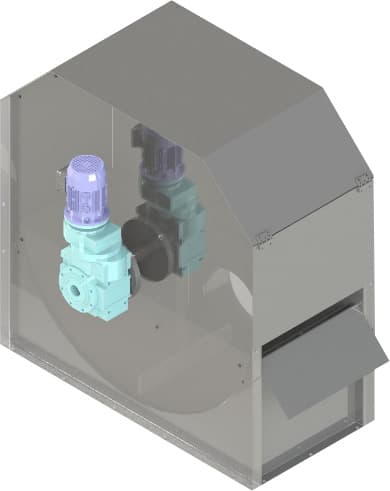
Mechanical (automatic) bar screens use a motorized rake mechanism to continuously or intermittently remove accumulated screenings from the bar rack and convey them to a collection bin or screenings press. This automation is essential for large plants where manual cleaning would be impractical and where unattended operation is required. Common types include front-raked climber screens, back-raked self-cleaning screens, and step screens.
Manual bar screens consist of a fixed inclined bar rack through which wastewater flows, with screenings removed periodically by a hand-operated rake. They are used as a backup to the automatic screen, at small-capacity plants, or at locations where power is not available. Both screen types are fabricated in mild steel with hot-dip galvanizing or stainless steel (SS304/SS316) to resist corrosion in the aggressive wet well environment.
Process
How Mechanical Bar Screens Work
Inlet Channel Flow
Incoming wastewater flows through the inlet channel and approaches the inclined or vertical bar rack. The bars are spaced at the design clear opening (typically 6–20 mm for medium screening) to allow water and fine solids to pass while capturing larger objects.
Solids Capture & Accumulation
Rags, plastics, fibres, and debris accumulate on the upstream face of the bar rack. As the screen mat builds up, head loss across the screen increases, triggering automated cleaning based on a differential level sensor or a timed cycle.
Automated Rake Cycle
On a signal from the level sensor or timer, the motorized rake mechanism engages. Rake tines travel along the bar rack (upward for front-raked designs, downward for back-raked designs), combing screenings off the bars and lifting them to the discharge level at the top of the screen.
Screenings Discharge
At the top of the travel path, the rake discharges collected screenings onto a conveyor, into a collection hopper, or into a screenings washer/compactor. A wash spray system is often fitted to rinse screenings and return washed water to the channel.
Screenings Handling
Collected screenings are dewatered in a screw press or compactor to reduce volume and weight before disposal. The compacted screenings cake (with moisture content reduced to ~60–70%) is conveyed to waste containers for landfill or incineration.
Manual Override & Bypass
All automatic screens are equipped with a manual bar screen bypass channel fitted with a manual trash screen or stoplog arrangement. During maintenance of the automatic screen, flow is diverted through the bypass to maintain continuous plant operation.
Benefits
Key Advantages
- Protects pumps, aerators, diffusers, and membranes from mechanical damage by solids and debris
- Automated raking eliminates continuous manual cleaning, enabling unmanned or minimum-staff operation
- Wide choice of bar spacings (6–100 mm) to match the solids content and downstream equipment sensitivity
- Front-raked and back-raked designs available to suit channel geometry and civil layout constraints
- Differential head control ensures cleaning is triggered by actual loading, not just time — preventing screen blinding
- Screenings compaction integration reduces disposal volume by 40–60%
- Stainless steel construction (SS304/SS316) resists corrosion in aggressive sewage and industrial effluent environments
- Low energy consumption — motor operates only during rake cycles, not continuously
- Manual backup screen on bypass channel ensures continuous plant protection during maintenance
- Compact inclined installation fits within standard inlet channel widths
Applications
Industries & Use Cases
Get a Quote or Technical Consultation
Our engineers can help you select the right mechanical & manual bar screens configuration for your application.