
Disk Filters for Tertiary Treatment
Continuous 24/7 stacked cloth disk filtration — compact, self-cleaning tertiary polishing that removes suspended solids, phosphorus, and color in a single pass
Overview
About Disk Filters for Tertiary Treatment
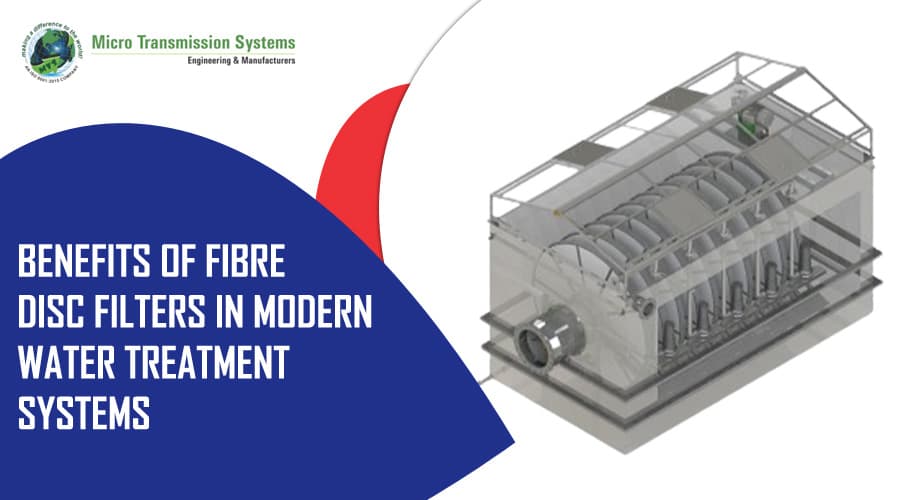
Disk filters provide continuous tertiary treatment of secondary-clarified wastewater effluent, removing residual suspended solids, colloidal matter, phosphorus (in conjunction with chemical pre-treatment), and color to meet stringent discharge or reuse quality standards. The filtration media consists of multiple circular disks stacked on a central drum shaft, each covered with a woven synthetic fiber cloth that captures fine particles as wastewater flows through.
The key operational advantage of disk filters is their continuous, 24-hour automatic operation without process interruption. When the pressure differential across the cloth reaches the cleaning threshold, an integrated auto-backwash system activates sequentially on individual disk segments, cleaning the cloth surface with a low-volume pressurized water spray while the remaining segments continue filtering. This sequential cleaning means the filter never goes offline — treated water flows continuously through uncleaned segments while individual segments are being cleaned.
Disk filters achieve a suspended solids outlet concentration of less than 5 mg/L, making them suitable as a polishing stage for treated water destined for reuse in shower, backwash, and irrigation systems without risk of nozzle clogging. In India, disc filters are increasingly mandated post-secondary clarifier in sewage treatment plants (STPs) to meet treated sewage reuse quality standards. Units are available as fully metallic self-contained systems for smaller capacities, or as in-ground civil structures with factory-supplied filter internals for larger municipal installations.
Disk filters offer very high hydraulic loading rates relative to their footprint, making them significantly more compact than conventional rapid sand filters or multimedia pressure filters of equivalent capacity. The cloth media operates at low differential pressures, reducing energy consumption, and the low backwash-to-influent volume ratio (typically 1–3%) minimizes recycle flows back to the head of the plant.
Process
How Disk Filtration Works
Effluent Inlet & Distribution
Secondary-treated effluent enters the filter tank and submerges the rotating disk assembly. Wastewater is distributed uniformly across the full width of the disk stack by the tank geometry.
Inside-Out Flow Through Cloth Media
Effluent flows from outside the disk surfaces through the woven synthetic fiber cloth and into the hollow interior of the disk drum. Suspended solids, phosphorus flocs, and particulate matter are captured on the outer cloth surface as water passes through.
Filtered Effluent Collection
Filtered water collects inside the drum and flows out through the central outlet to the effluent channel or discharge point. Treatment is continuous as long as differential pressure remains within operating limits.
Automatic Backwash Cleaning
When solids accumulation raises the differential pressure to the set threshold, the auto-cleaning system activates. High-pressure backwash water sprays onto the outer cloth surface from inside the drum, dislodging captured solids. The backwash sequence runs segment by segment, maintaining filtration continuity throughout the cleaning cycle.
Benefits
Key Advantages
- Continuous 24/7 operation — auto-backwash cleaning without process interruption
- Very low backwash volume (1–3% of influent) minimizes recycle to plant head
- High hydraulic loading capacity in a compact footprint versus sand or multimedia filters
- Removes suspended solids, phosphorus, and color in a single filtration step
- Simple structure with few moving parts — straightforward maintenance requirements
- Woven synthetic fiber cloth provides reliable fine filtration without media migration
- Low operating differential pressure reduces energy consumption
- Suitable for new plants and retrofitting existing tertiary treatment stages
Applications
Industries & Use Cases
Explore More
Related Products
Get a Quote or Technical Consultation
Our engineers can help you select the right disk filters for tertiary treatment configuration for your application.